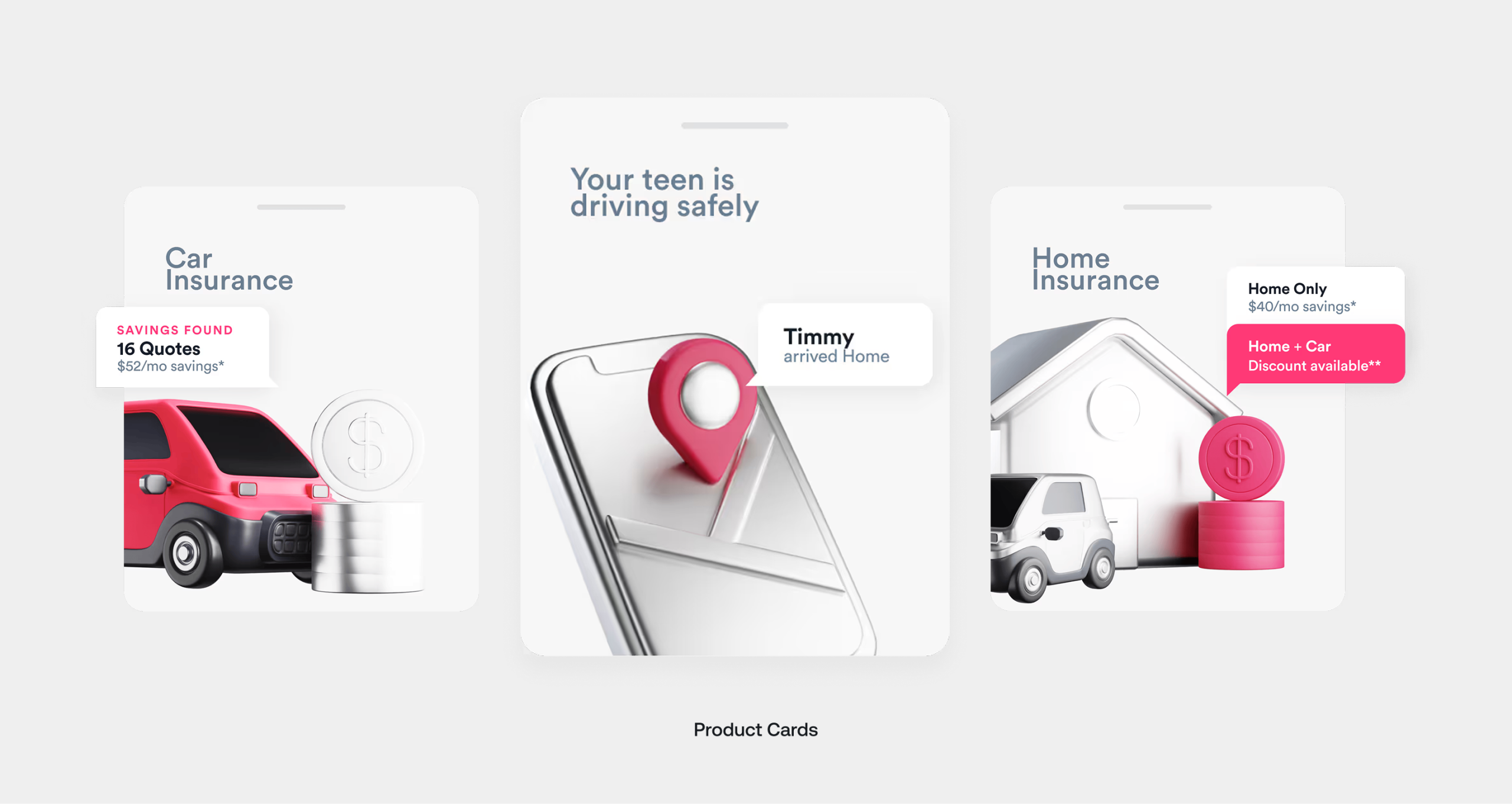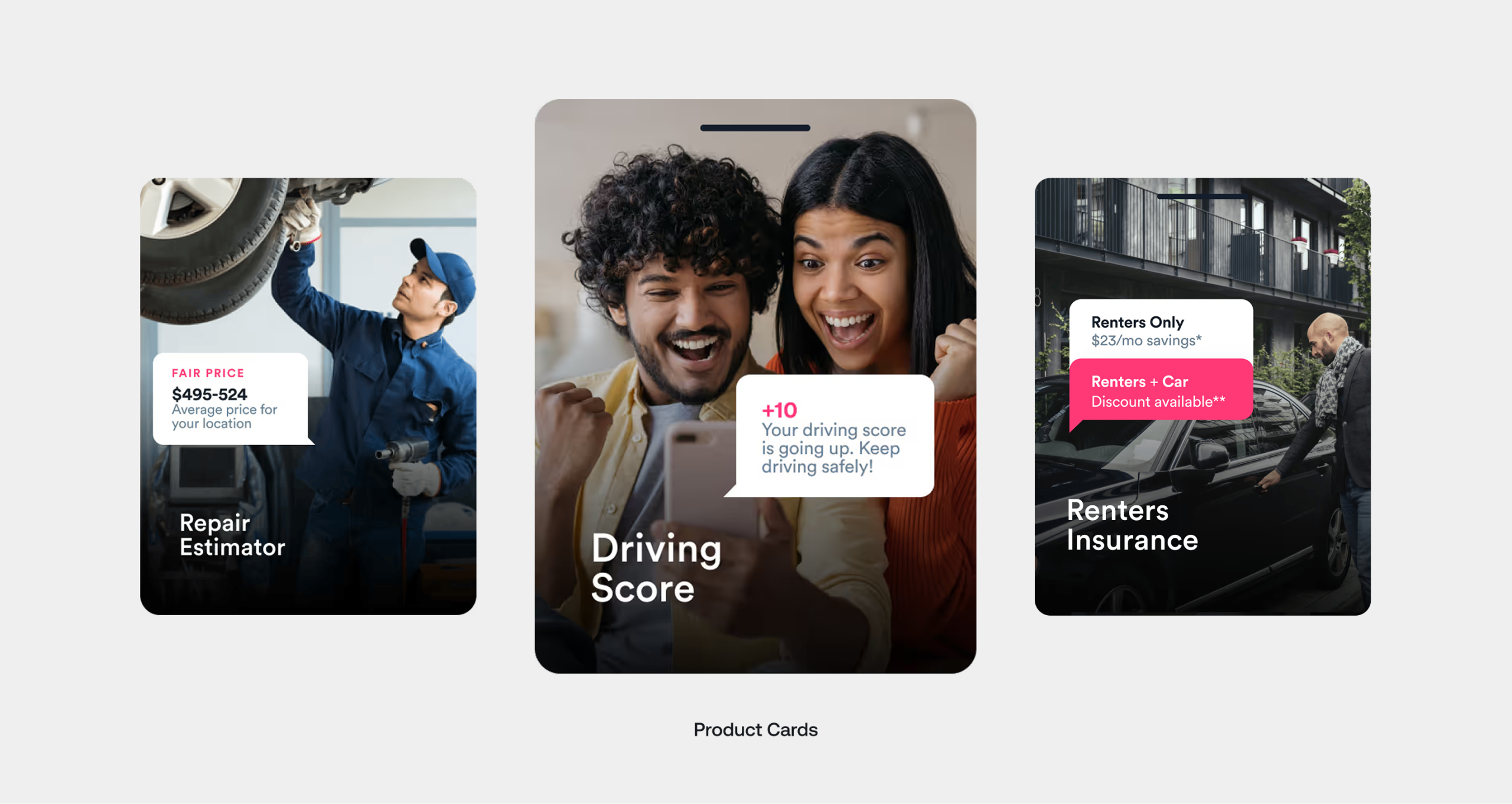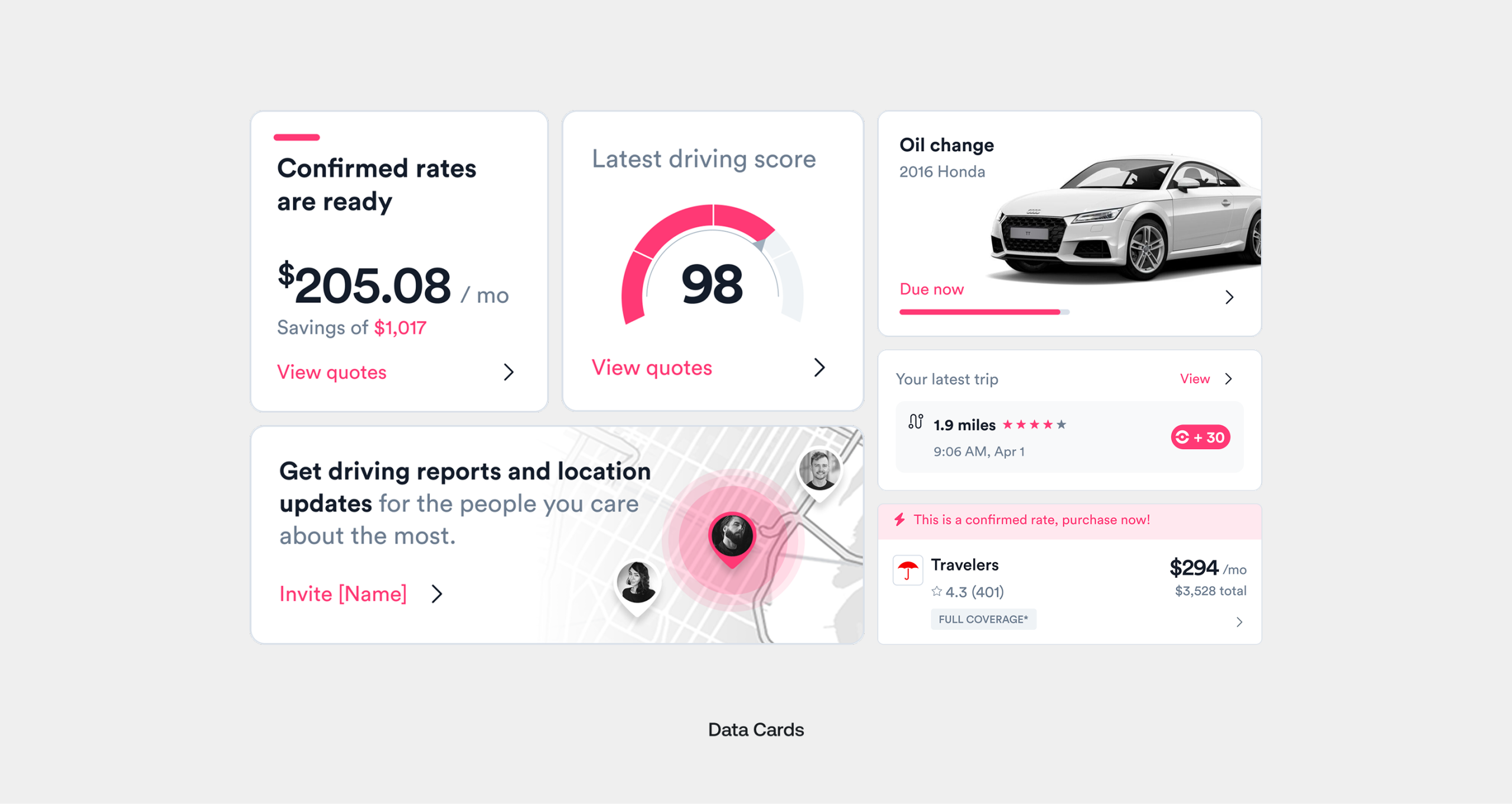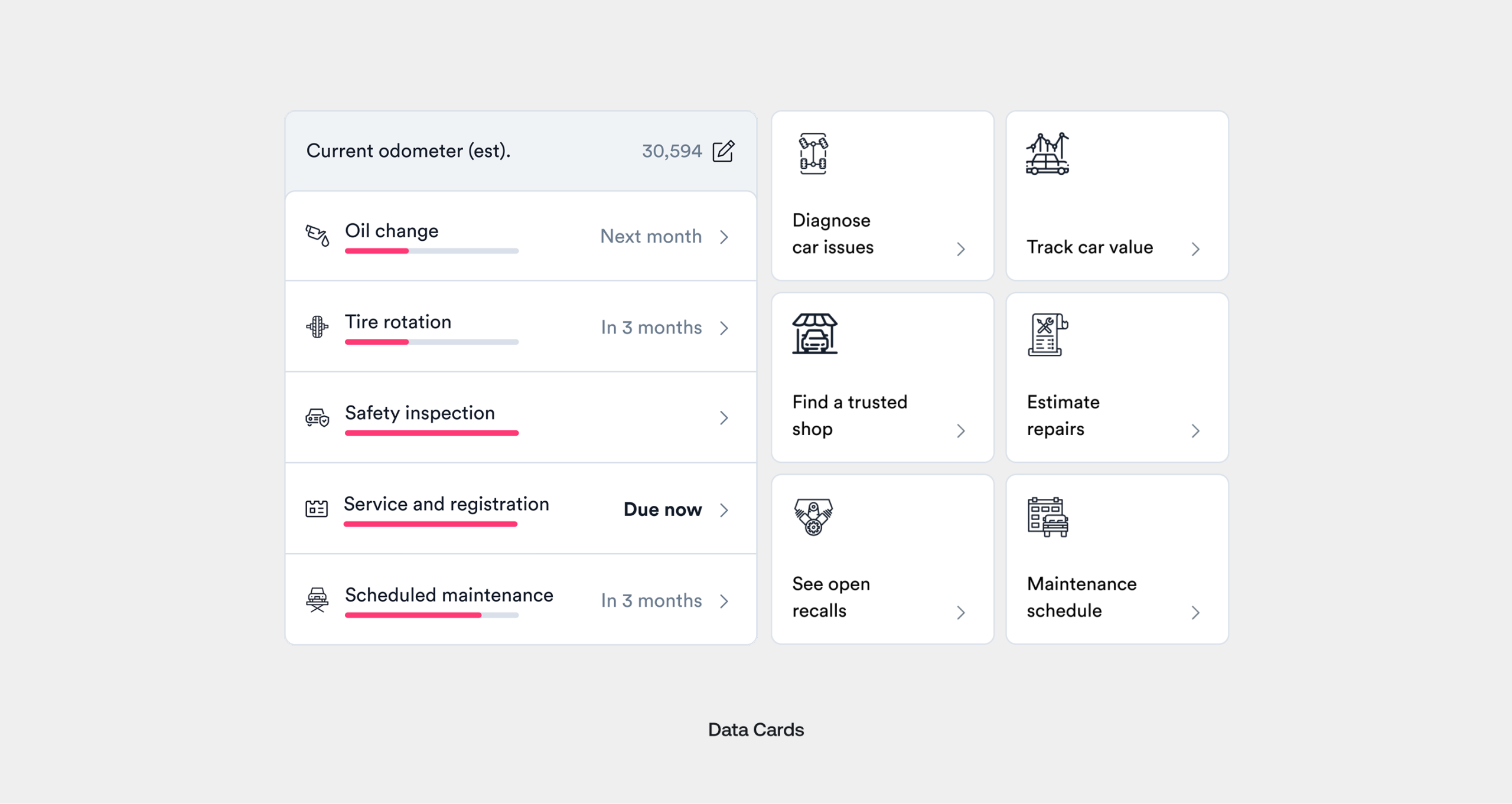
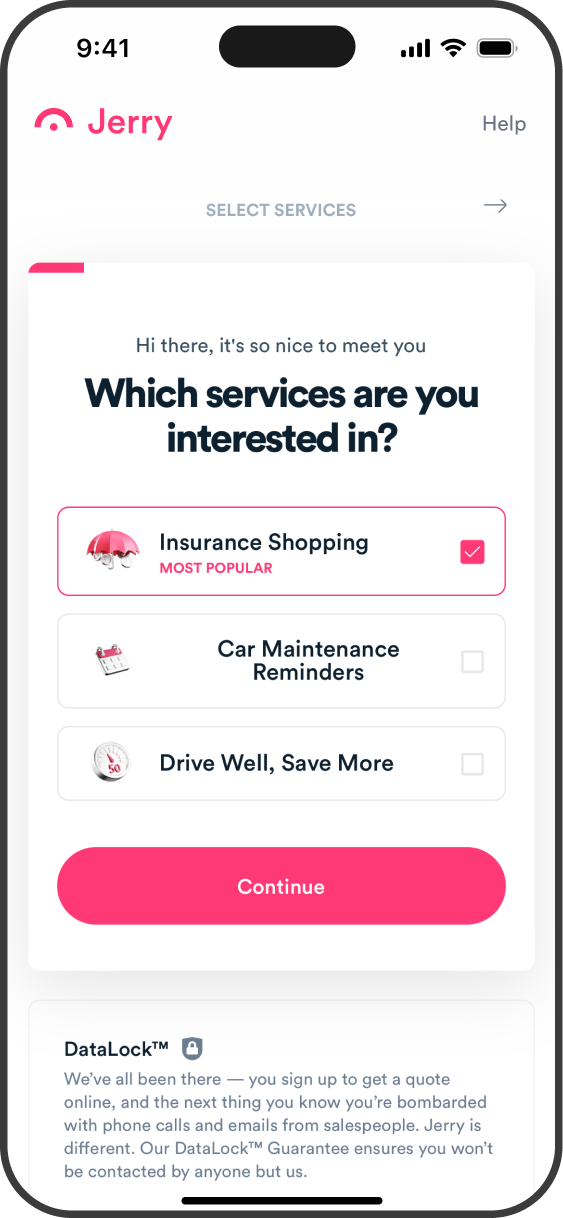
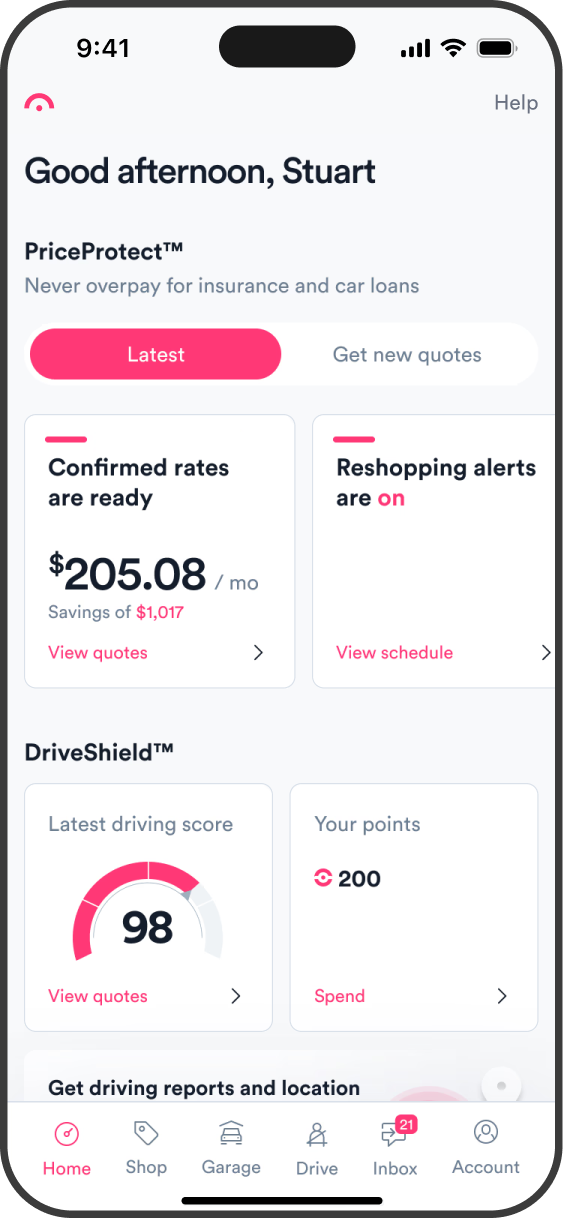
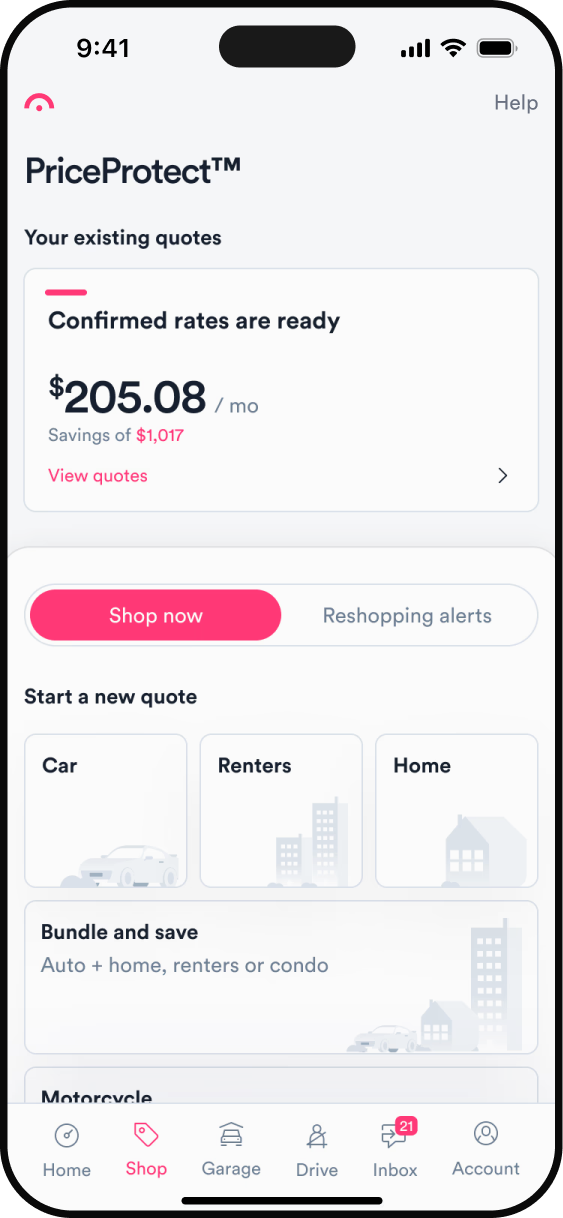
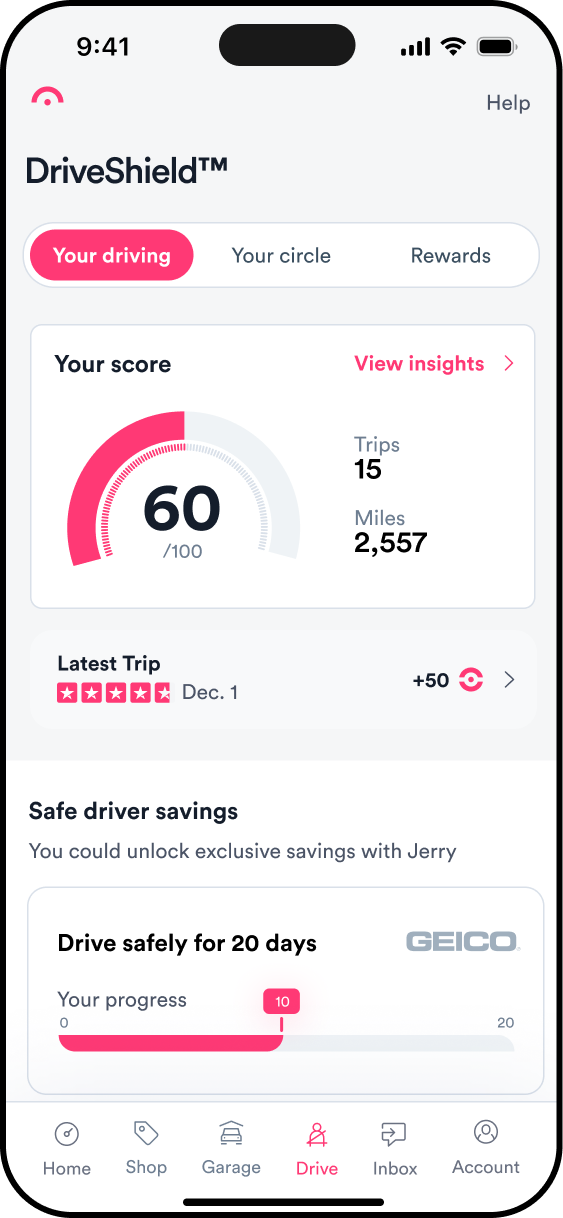
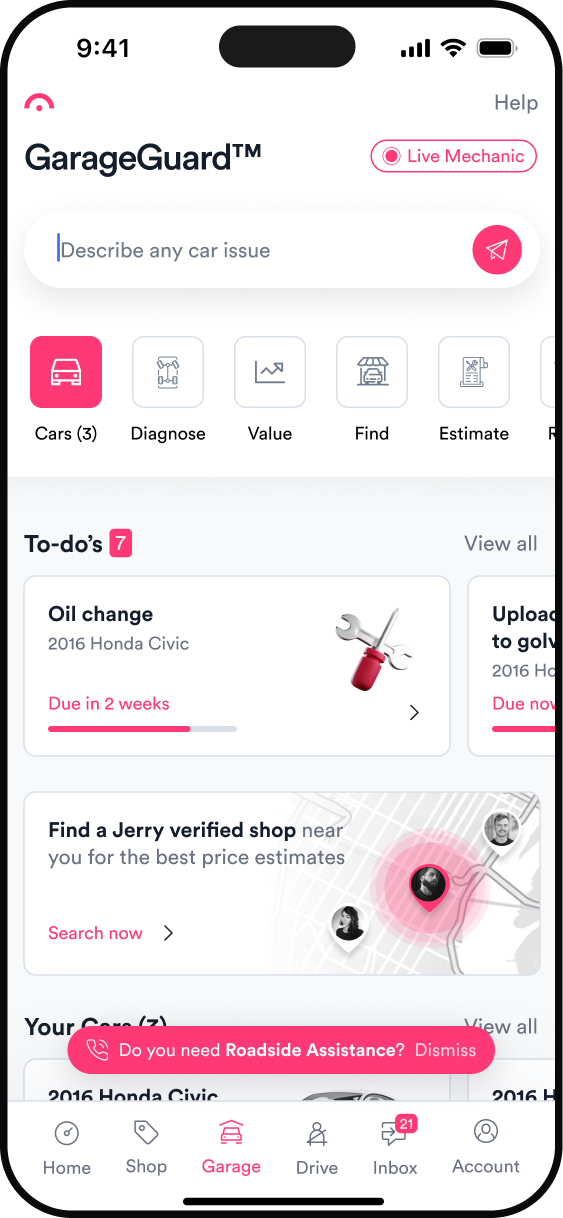
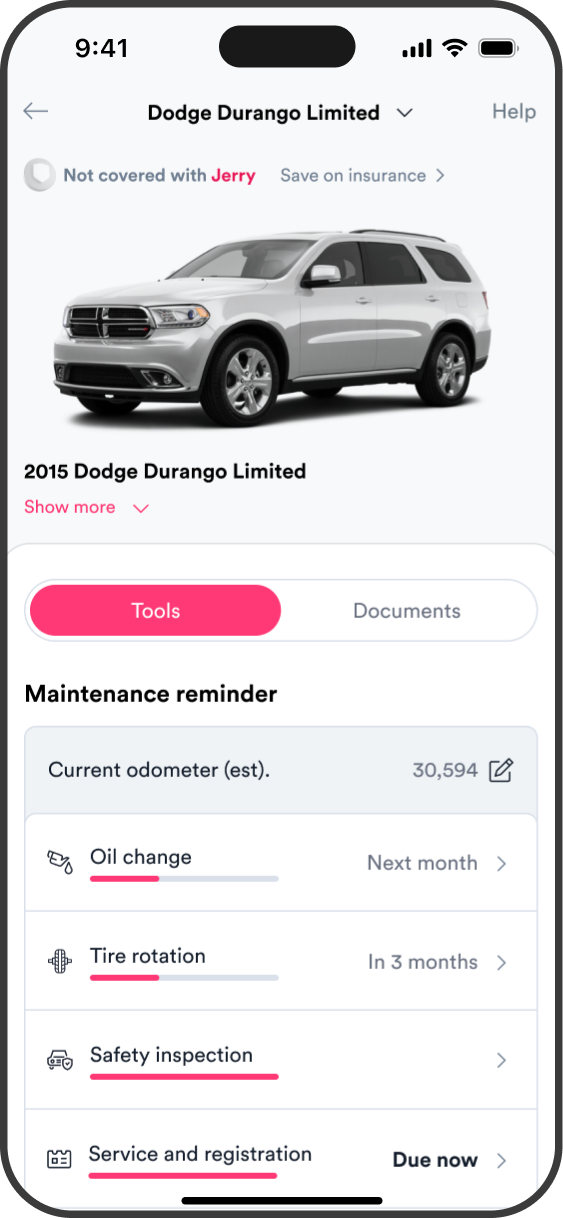
Jerry’s mobile app allows users to compare and buy insurance, primarily for vehicle but also home insurance. The software uses artificial intelligence and machine learning, and Jerry generates revenue by earning a percentage on policy purchases.
I was involved as an IC Product Designer across all parts of this project.
Scope of work
Strategy, Research, Design System, Product Design, UX, UI
Year
2025

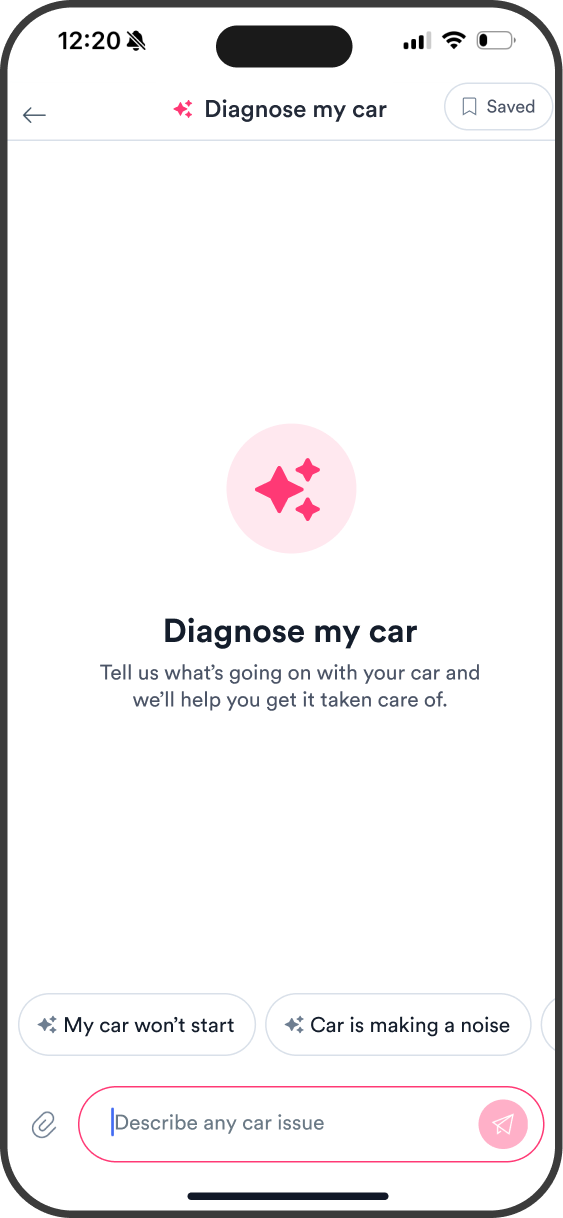
Creating an AI powered Diagnose my car application
Problem Framing
– Define core user personas (DIYer vs. clueless owner)
– Write problem statements per persona
– Identify edge cases (vintage cars, EVs, fleet vehicles)
UX Design
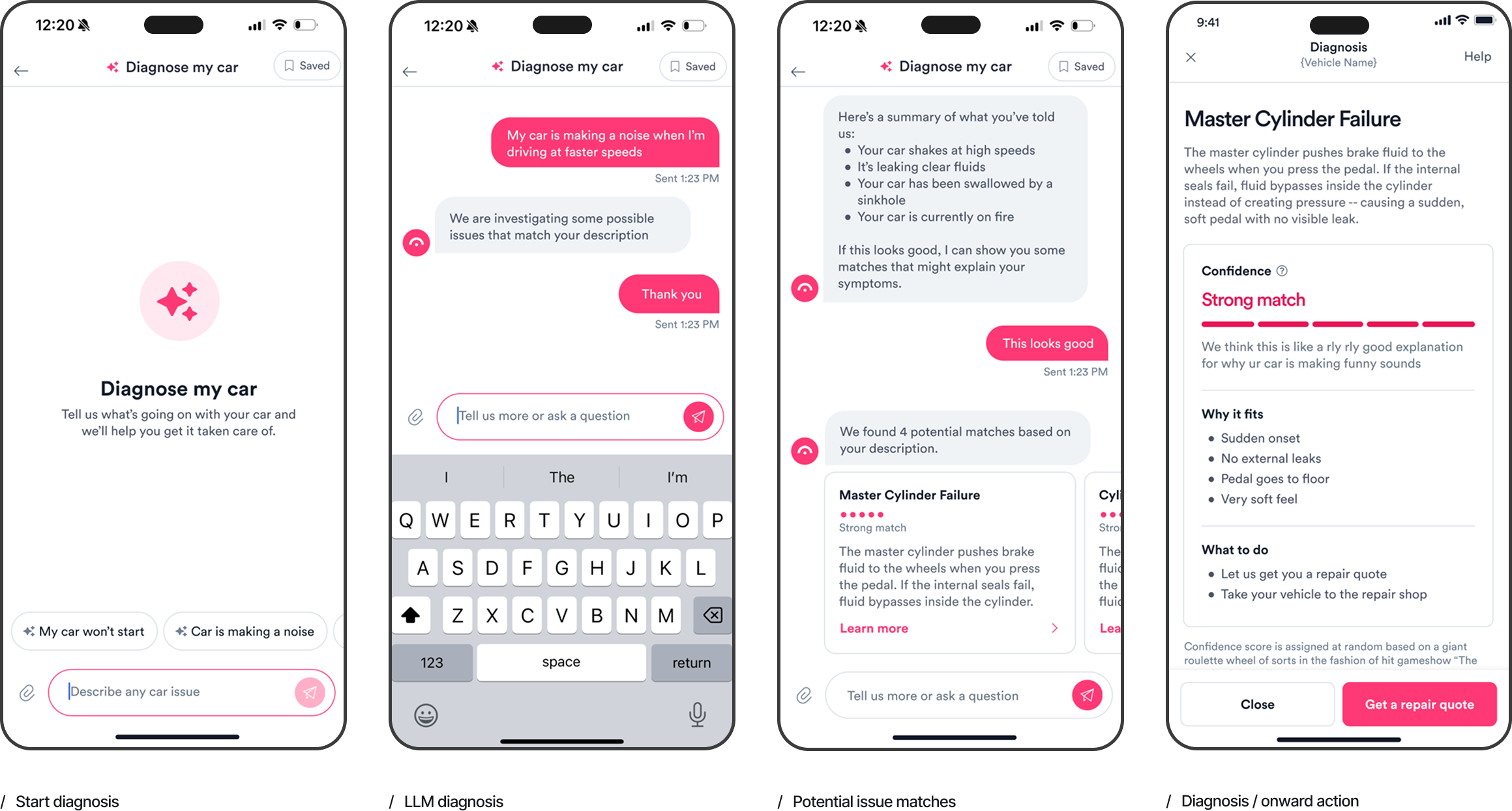
– Map end-to-end user journey – symptom to solution
– Design conversational flow for LLM input
– Prototype symptom input (voice, text, photo)
– Design error state handling for ambiguous inputs
– Create escalation path to human mechanic
AI Behaviour Design
– Define confidence threshold for LLM responses
– Write guardrails for safety-critical issues (brakes, steering)
– Design “I don’t know” graceful failure states
– Spec hallucination mitigation strategy
Iteration
– Build feedback loop (“Was this helpful?”)
– Track resolution rate as north star metric
– Set up mechanic review pipeline for failed diagnoses
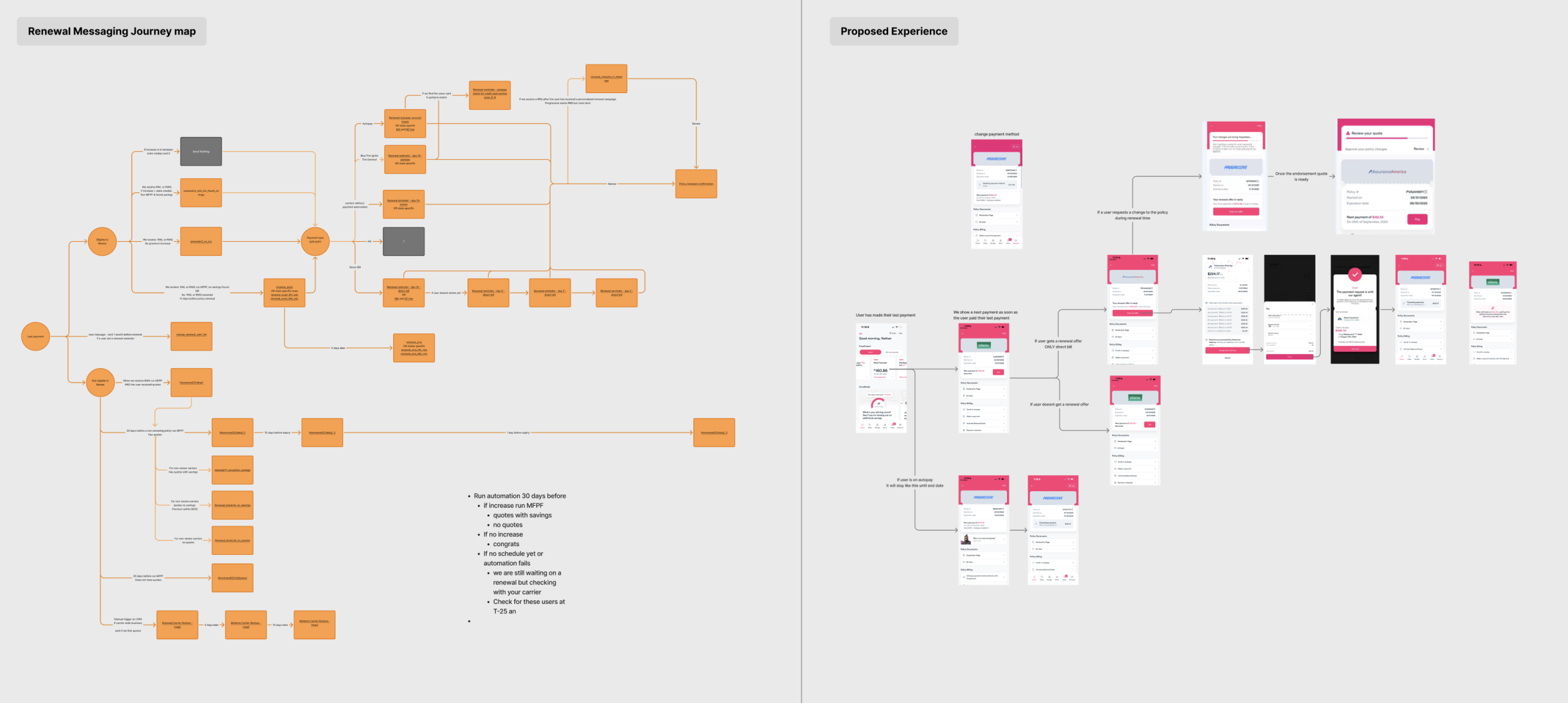
Redesigning the Insurance Renewals process
Problem Framing
– Define what “streamlined” means for different user types
– Identify where trust breaks down in current flow
– Pinpoint decision paralysis moments (too many options)
– Separate must-have vs. nice-to-have redesign scope
Interaction Design
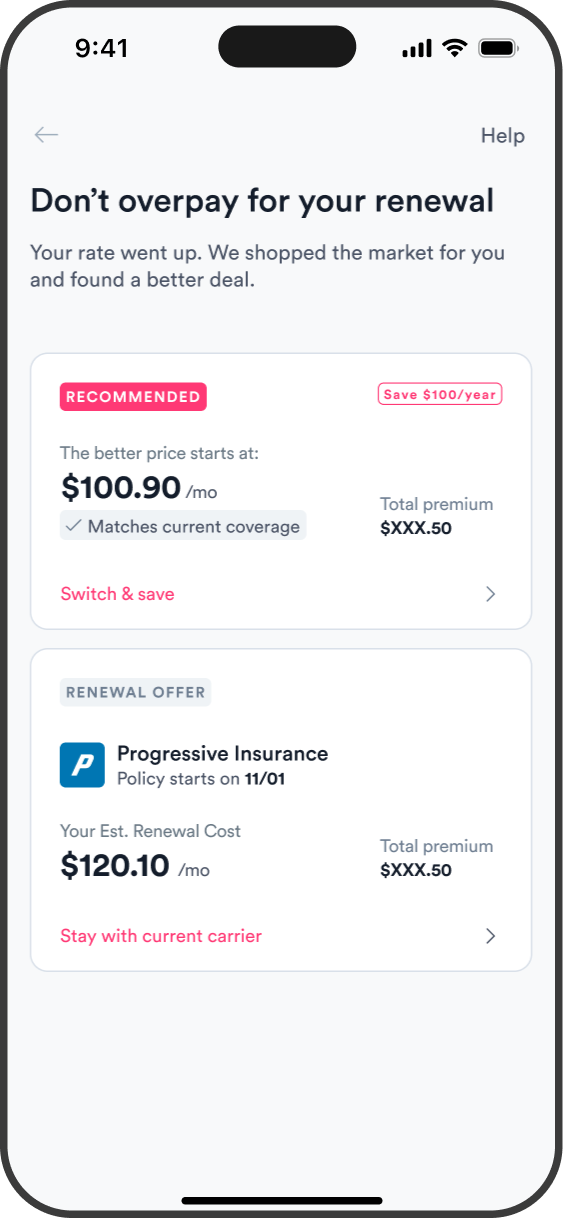
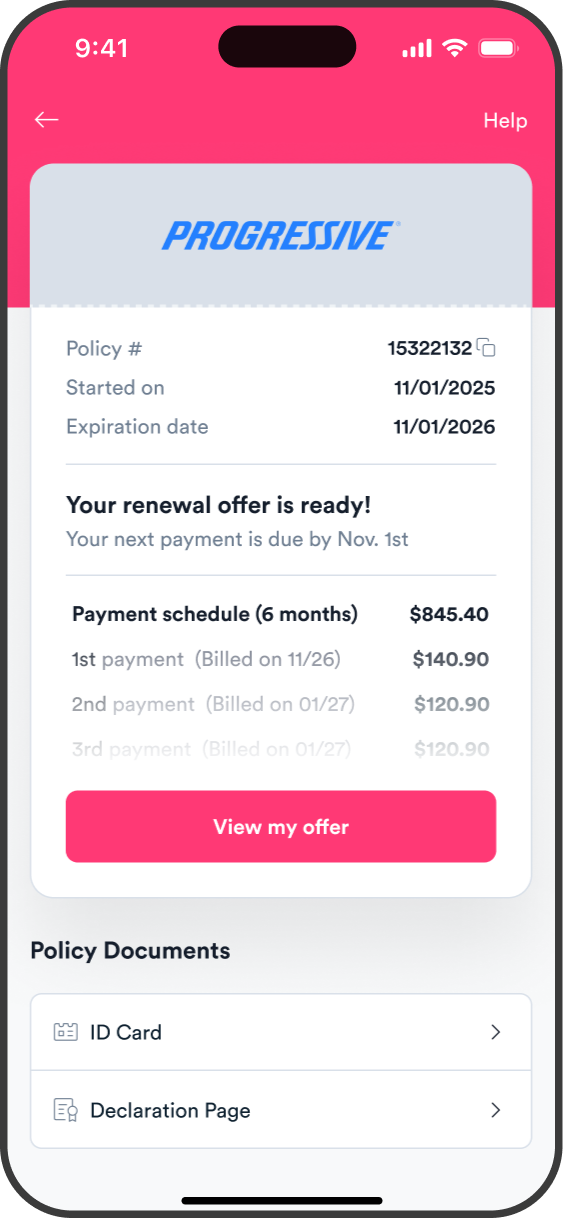
– Redesign renewal notice (email/push) for clarity and urgency
– Reduce steps from notification to confirmed renewal
– Pre-populate all known user and vehicle data
– Design single summary view of current vs. new policy
– Add plain-English translation of policy changes
– Build smart defaults that reduce decision-making
– Design frictionless “renew as-is” one-tap option
– Prototype amendment flow for users who want to adjust cover
Iteration
– Track renewal conversion as primary north star metric
– Build post-renewal satisfaction survey (NPS + open feedback)
– Review churned users monthly to identify redesign gaps
– Iterate on LLM assistant quality on unanswered queries
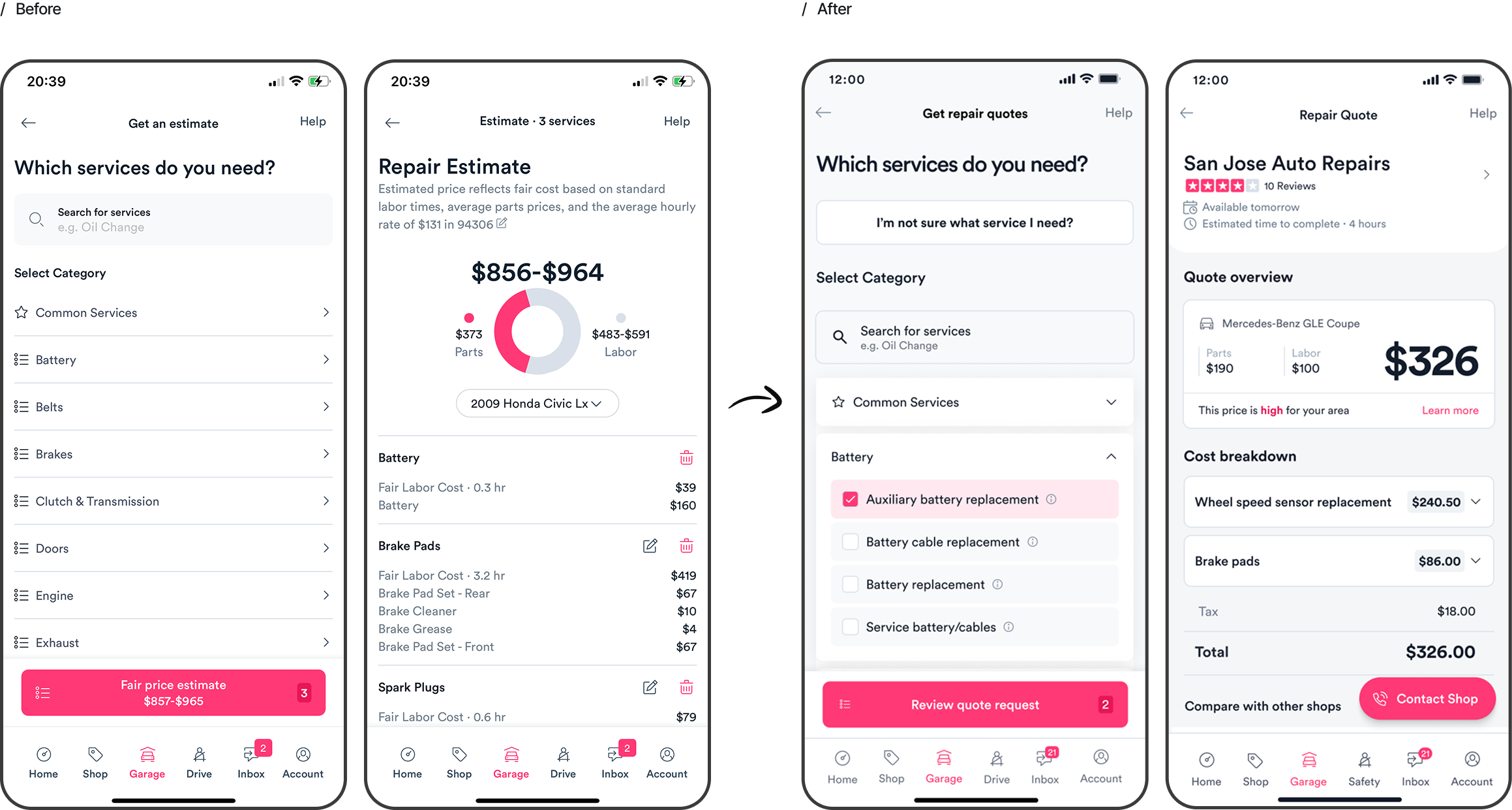
Improving the Repair Estimate user journey
Problem Framing
– Define what “trust” means at each step
– Identify gaps between user expectation and quote output
– Map moments of confusion or anxiety in current flow
– Prioritise redesign scope (trust vs. accuracy vs. speed)
Interaction Design
– Redesign input flow to feel conversational, not form-like
– Reduce number of steps to reach a quote
– Add inline explanations for jargon (parts, labour, VAT)
– Design progressive disclosure for quote breakdown detail
– Prototype loading states that communicate “working hard”
– Design comparison view for repair options (basic vs. premium)
Iteration
– Instrument every step for drop-off tracking
– Build “flag this quote” feedback mechanism
– Review flagged quotes weekly with ops/mechanic team
Building the brand and developing the design system
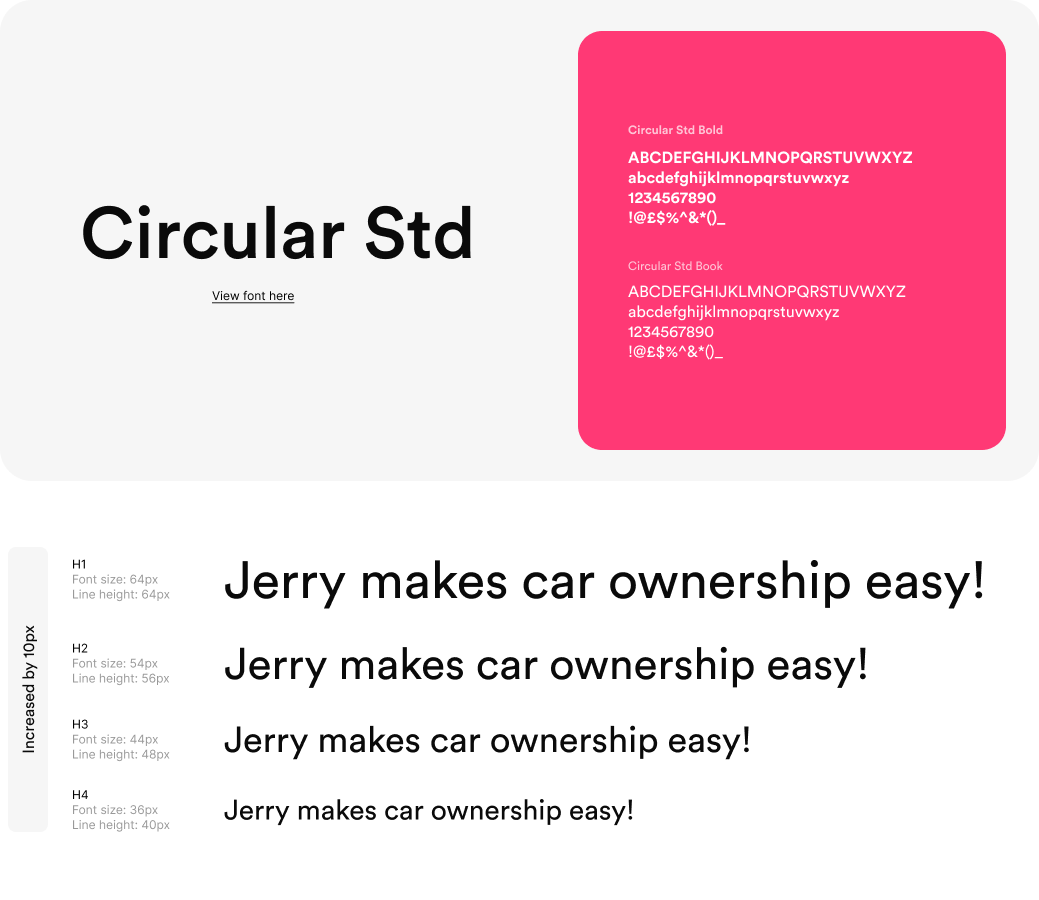
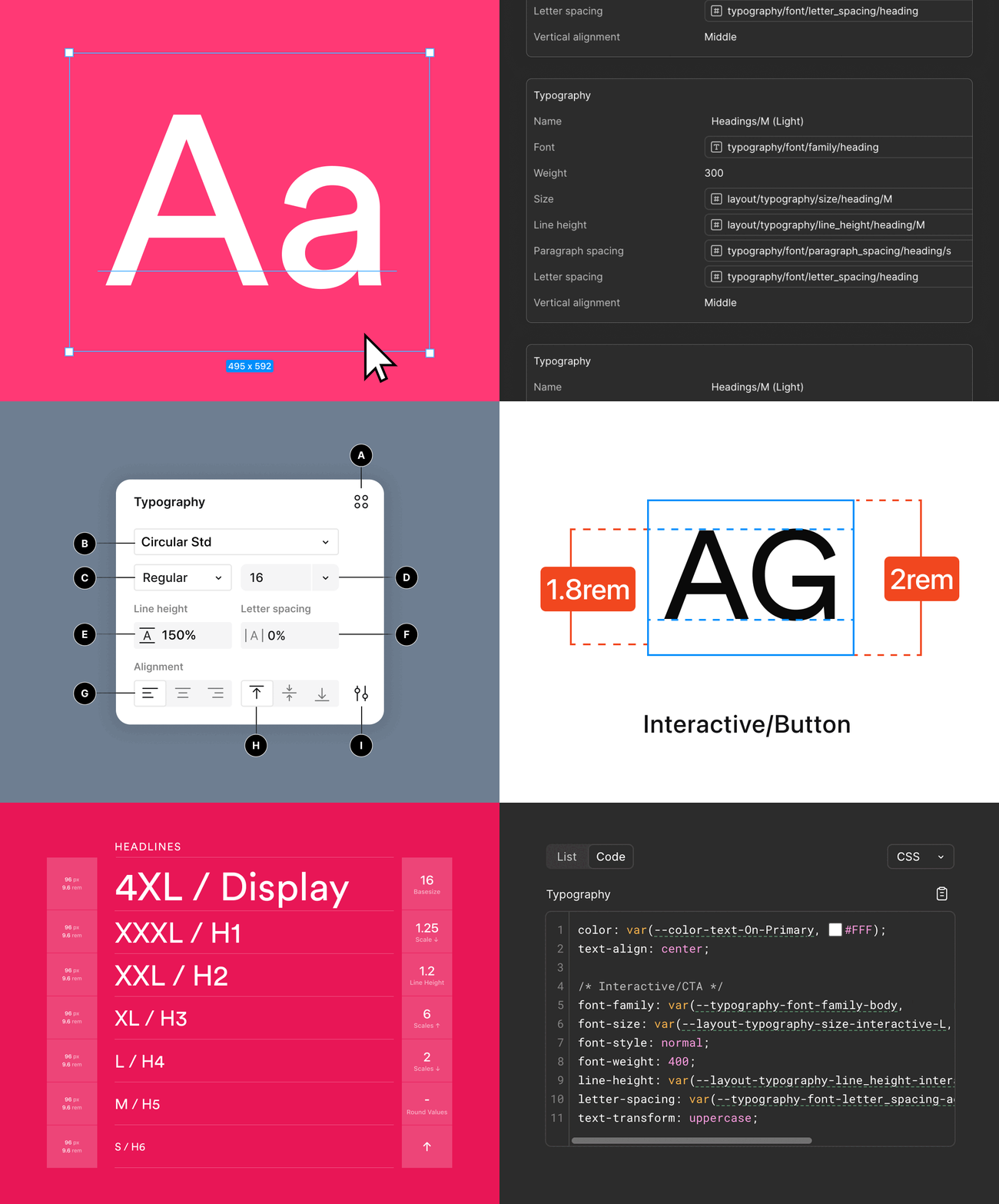
The task was to build a unified design system and workflow across design and engineering – reconciling inconsistent components, legacy patterns, and competing workflows. Establishing a single source of truth, shared token libraries, and clear governance. The result: faster iteration, consistent user experiences, and measurable gains in cross-functional adoption.
#141D2B
#4B5466
#FF3975
#00cbff
#FFE8EF
#EFF3F6